
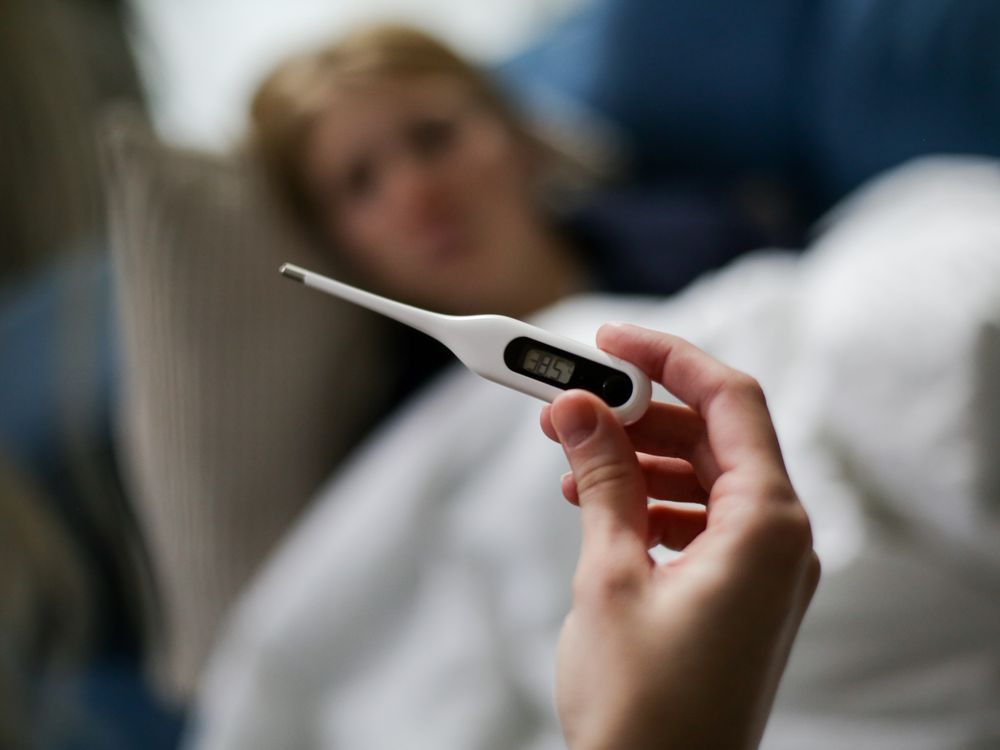
Key takeaways
- A positive NS1 confirms a current dengue infection. It says nothing about how severe it will become.
- The day the fever breaks deserves more attention than the day it peaks; the critical phase runs about days 3 to 8.
- Memorize the seven warning signs. They decide the hospital question, not the number on your report.
- Paracetamol for fever, never aspirin or ibuprofen. Fluids and rest do the heavy lifting.
- A falling platelet count alone is not a transfusion trigger; the trend, the hematocrit, and bleeding decide.
- Dengue is notifiable in Maharashtra, so your doctor or lab reports your case to the BMC. You do not need to file anything yourself.
Book tests from this article
Sample collected at home - free
- Complete Blood Count (CBC)
₹199₹59967% off
- Dengue NS1 Antigen
₹949₹1,44935% off
- Dengue - IgM (ELISA)
₹799₹1,04924% off
Free collection 24 hr reports
Your report says positive. Here is the one thing that means.
You had the fever, the body ache, maybe the headache behind your eyes. Your doctor ordered the NS1 test. The report came back with one word that made your stomach drop: positive.
Here is the short version, so you can stop scrolling with a clenched jaw. A positive NS1 means you have dengue. Not "maybe." Not "probably." The test found a protein made by the dengue virus itself, circulating in your blood right now. The US CDC, which writes the testing guidance most doctors follow, puts it bluntly: a positive NS1 confirms dengue virus infection.
Now the second half of the short version, which matters just as much. That positive tells you nothing about how bad your dengue will get. It is not a score. It is not a stage. It does not say mild or severe, and it does not say which of the four dengue types you caught. Most people with dengue ride out the fever at home, rest, drink fluids, and get better in about a week. A smaller number develop warning signs, and a still smaller number get severe dengue. The word on your report cannot sort you into any of those groups. Only your body, and the numbers your doctor tracks over the next few days, can.
So keep the panic small and the attention big. A practical first step, before anything else in this article: tell your doctor the result and ask when they want the next CBC. Most dengue care is a conversation between you, your doctor, and a series of small blood reports. The internet at 2 a.m. is a poor substitute for that loop, and almost every scare story you will find online skips the part where the patient was fine.
Dengue runs on a calendar, not a scoreboard
Here is the fact that surprises almost everyone at our counter: the most dangerous day of dengue is often not the day the fever is highest. It is the day the fever breaks.
Dengue typically moves through three phases. The first is the febrile phase, days 1 to 3 or so of fever, body aches, headache, sometimes nausea. Then comes the critical phase, usually between day 3 and day 8 after the fever started, right around the time the temperature comes down. That is when the blood vessels get leaky, platelets slide, and the warning signs show up. After that comes recovery, often with an itchy rash and a slow return of appetite.
Why does this matter to you, sitting with a positive report? Because most people celebrate the fever dropping. "Fever's gone, I must be getting better," is the most common thing we hear on day 4. The WHO's own fact sheet warns about exactly this moment: a decrease in your temperature does not necessarily mean you are recovering, and severe symptoms often appear after the fever has gone away. That is why your doctor wants blood tests on the days you are starting to feel a bit better, and it answers the question patients ask with real annoyance: the fever is gone, so why does your doctor want another blood test tomorrow? Because that is when the report needs watching most closely. We keep a separate day-by-day guide on which dengue test suits which day of fever for the moments when the question is not "what does my report mean" but "which test should I even take next."
Dengue is a disease of days. Your job this week is to know which day you are on and what to watch for on it.
The seven warning signs worth memorizing tonight
If you take one section of this article to heart, make it this one. These are the warning signs the CDC lists for dengue, and they are the same signs Indian and WHO guidance converge on. They typically appear as the fever settles. If any one of them shows up, do not wait for the morning. Call your doctor or go to the hospital.
- Severe abdominal pain or tenderness. Not the mild stomach cramp of a fever day. A real, can't-ignore ache in the belly.
- Persistent vomiting. The CDC defines this as three or more episodes in an hour, or four or more in six hours. Once you cannot keep fluids down, the fluid maths of dengue stops working at home.
- Fluid collecting where it shouldn't. Swelling, a puffy face, a feeling of fullness in the belly. This means plasma is leaking out of the blood vessels, the central event of severe dengue.
- Bleeding from the gums, nose, or elsewhere. Spots of blood when you brush, a nosebleed that starts on its own, blood in vomit or stool, unusually heavy menstrual bleeding.
- A change in how alert you are. Unusual drowsiness, restlessness, irritability, confusion. If a dengue patient who was talking normally gets strangely quiet or hard to wake, treat it as urgent.
- Liver tenderness or swelling. Pain under the right ribs where the liver sits.
- The lab pair: platelets falling while hematocrit rises. This one shows up in your CBC report, not in how you feel. Hematocrit is the share of your blood made up of red cells. When plasma leaks out of the vessels, the blood left behind gets more concentrated, so hematocrit climbs even as platelets fall. Your doctor watches this pair like a hawk, because it is the earliest laboratory hint that the critical phase has begun.
Read that list once more. Most dengue patients never see a single one of these. But everyone with a positive NS1 should know them the way you know your own phone number, because they are the things that decide the hospital question, and they are the things a "positive" on your report can never predict. Stick the list on the fridge if there is an anxious family involved. It beats a group chat full of conflicting advice.
What the test actually caught: a viral protein in your blood
NS1 stands for non-structural protein 1. It is a protein the dengue virus secretes while it replicates. Your immune system has nothing to do with this test. Your antibodies have nothing to do with it. The test is looking for a piece of the virus itself, which is why a positive is so decisive. Antibodies can cross-react and confuse; finding viral protein in blood does not leave much room for argument.
Timing is everything with NS1. The test works best in the first 7 days of illness. In a first dengue infection, the protein can stay detectable for up to about 9 days after symptoms start, and it can linger for a few days even after the fever has resolved. In a repeat infection, the window is shorter, often just a few days, because the antibodies already floating around from the previous infection mop up the protein faster.
This timing explains almost every confusing NS1 story we hear. "My report was negative on day 2 but positive on day 5" happens when the protein had not built up enough yet, or when the first sample was drawn within a day or two of infection, before there was anything to detect. "My day-9 report was negative, but I still have symptoms" happens because the window closed. The Mayo Clinic's laboratory interpretation notes both directions: testing too early or too late can miss it.
A note on accuracy, since people ask. False positives are uncommon. The known exceptions are infections with certain other mosquito-borne flaviviruses, like West Nile or yellow fever, which are not what you are dealing with in Mumbai. A positive NS1 in Mumbai's monsoon, with fever, is dengue.
One more practical point about the test itself. You may have had the NS1 done as a rapid card at a clinic, or as a lab-based ELISA at a diagnostic lab. The rapid card gives an answer in under an hour, which is why clinics love it during an outbreak. The lab ELISA takes longer but is the more sensitive method, and it reports a clearer read. If a rapid card came back negative on the wrong day and your doctor still suspects dengue, the lab version is often the next step. We explain how the NS1, IgM and IgG methods differ in our guide to dengue test methods: NS1 vs IgM vs IgG.
What your report does not say
Reports invite over-reading. Here is what your positive NS1 result genuinely does not tell you.
It does not tell you which of the four dengue types you have. The test does not carry serotype information, and the CDC is explicit that this does not change patient care. Treatment is the same for all four. Serotype matters to epidemiologists tracking outbreaks, not to your recovery.
It does not tell you how severe your dengue is or will become. There is no severe-dengue protein level on an NS1 card. Severity is assessed the old-fashioned way: symptoms, warning signs, blood pressure, and the hematocrit-platelet trend.
A negative result would not have ruled dengue out. If your NS1 had come back negative, you would still not be in the clear. The guidance is clear that a negative antigen test does not exclude infection, especially if the sample was taken very early or after day 7. That is why doctors pair it with antibody tests. Dengue IgM becomes detectable around day 4 or 5 of symptoms and can stay positive for up to three months. In the first week, NS1 plus IgM together usually settle the question. A single IgG result, on its own, never diagnoses an acute infection, because IgG can simply be the leftover of a dengue you had years ago.
So your report page may eventually carry several lines: NS1 antigen, IgM, IgG. Read them as a timeline, not a scoreboard. NS1 speaks for the early days. IgM speaks for the days after that. IgG, alone, is a history book, not a diagnosis.
Getting through the week at home
Most dengue is managed at home. Not with heroic measures, and not with a pharmacy's worth of tablets. The WHO and CDC guidance is almost boring in its consistency: rest, fluids, paracetamol for fever and pain, and close attention to the warning signs. Here is how that breaks down in practice, in the paired do-and-don't format our patients actually remember.
Fluids
Do: drink more than you think you need. Water, oral rehydration solution, coconut water, soups, diluted fruit juices. Dehydration makes everything in dengue worse, and vomiting quietly undoes your fluid intake, so keep a rough mental count through the day. Don't: wait until you feel thirsty to start. By the time a feverish person feels properly thirsty, they are already behind.
Fever medicine
Do: use paracetamol for fever and body aches, in the dose your doctor advised. Don't: reach for aspirin, ibuprofen, or other NSAIDs. Both the WHO and CDC flag this clearly, because these medicines increase bleeding risk, and dengue already pushes your platelets and clotting in the wrong direction. This is the single most common home-care mistake we see.
The day the fever breaks
Do: get more careful, not less, when the fever drops. Watch for the warning signs in section 3, keep the follow-up blood tests on schedule, and keep drinking fluids. Don't: assume the falling temperature means the illness is over and skip the doctor's follow-up. The critical phase hides behind exactly that assumption.
Keeping the mosquitoes off the rest of the house
Do: sleep under a mosquito net while you are ill, and keep repellent and screens going in the house for a few weeks. The CDC advises this for about three weeks. A mosquito that bites you during the illness can carry the virus to someone else in the family. Don't: assume only outdoor mosquitoes matter. The Aedes mosquito that spreads dengue bites during the day and happily lives indoors, behind curtains and under beds, which is why Mumbai sees so much of it even in well-kept homes.
A word about the home remedies people ask about at our counter, especially papaya leaf preparations. The international guidelines we rely on cover rest, fluids, paracetamol, monitoring, and warning signs. They do not establish any home remedy as effective, and nothing you drink at home replaces the daily watch on your symptoms and blood counts. Whatever else you consider, run it past your doctor first.
The three questions we hear most at the counter
Our Malad lab runs through monsoon with the NS1 machine rarely idle, and the same three questions come back every single day.
"Platelets kitne hain?" What is the platelet count? It is the first thing almost every family asks, and it is worth saying plainly: one platelet number, by itself, tells your doctor less than you think. A count of 80,000 that is stable is less worrying than a count of 120,000 that fell from 200,000 in a day. The trend is the message. And no, a low number alone does not mean a platelet transfusion is coming. We will come back to that.
"Report kab aayega?" When will the report come? For the NS1 itself, same-day reporting is standard at our lab, and the follow-up CBCs that your doctor orders through the week also come back within about 24 hours. The timing matters because the doctor wants to compare today's numbers with yesterday's.
"Ghar pe le sakte hain?" Can you collect the sample at home? Yes. Through the critical phase, your doctor may want a CBC every day, and dragging a feverish patient across Mumbai traffic daily helps nobody. Our phlebotomists do home collection across Malad, Kandivali, Borivali and Goregaon. The draw itself takes a couple of minutes: the tourniquet, the quick sting of the needle, the cotton ball pressed on and taped down while you hold your arm straight. People always ask if it hurts. It is a sharp pinch for about two seconds, and then it is the cotton ball you remember.
The numbers your doctor is actually watching
Your doctor is not watching your NS1 result anymore. That question is answered. What gets watched now is your complete blood count (CBC), usually daily through the illness, and within it, two numbers in particular.
Platelets. These are the cell fragments that help blood clot, and dengue reliably drives them down. A count at or below 100,000 per microliter, together with a rising hematocrit, marks the critical phase in the standard case definitions. But the absolute number is less important than the direction and speed of the fall.
Hematocrit. This is the percentage of your blood volume taken up by red cells. Think of your blood as red cells floating in plasma. When plasma leaks out of the vessels during the critical phase, the red cells are left behind in less fluid, so the percentage climbs, like the same spoon of sugar in less water tasting sweeter. The CDC's warning-sign definition looks for a progressive rise across at least two consecutive measurements about six hours apart, happening at the same time as a rapid platelet drop. That pair, rising hematocrit plus falling platelets, is the single most important laboratory signal in dengue care. It is also invisible to you, which is why the blood tests continue after the fever ends. A single hematocrit number means little; the slope across two or three days means everything.
Your doctor may also check liver enzymes. Dengue inflames the liver in many patients, and the CDC's definition of severe dengue includes liver injury with AST or ALT above 1000 IU/L. Indian hospital protocols commonly include liver function among the routine dengue investigations. Mild enzyme rises are common and settle on their own; the very high numbers are the ones that change management.
Now the platelet-transfusion question, because it causes more family arguments than any other topic in dengue. The CDC's guidance is unambiguous: prophylactic platelet transfusions, meaning transfusion just because the number is low, are not recommended. India's national guidelines agree, with one narrow exception at extremely low levels, below 10,000 per microliter, even without bleeding. Otherwise, transfusion is reserved for significant active bleeding or hemodynamic instability. A platelet count of 40,000 in a patient who is drinking fluids, has no bleeding, and shows no warning signs is watched, not transfused. If a relative is pressuring the doctor for "platelets ka arrangement," this is the guidance the doctor is following. Ranges vary by laboratory, so always read your own report's reference column rather than a number you saw online.
Pregnancy, children, and the second-infection wrinkle
Three situations change how seriously a positive NS1 is taken.
Pregnancy. Pregnant women face a higher risk of severe dengue, and the CDC's clinical guidance lists pregnancy as a reason for inpatient management even when no warning signs are present. Dengue virus can also pass to the baby during pregnancy or around birth, with risks that include premature birth, low birth weight, and, in the worst cases, fetal loss. Newborns of infected mothers usually develop symptoms, if at all, within two weeks of birth, most often in the first week. If you are pregnant and NS1-positive, your doctor will want you watched in a hospital setting. Do not negotiate this one at home. The reason is not only your own risk. Fever control, fluid balance and blood-count monitoring all get more delicate in pregnancy, and the team looking after you is effectively watching two patients at once.
Children. Young children are also at higher risk of severe dengue, according to the WHO. The warning signs look the same, but children dehydrate faster and describe symptoms poorly, so the threshold for bringing a child in is lower. Never dose medicines for a child by guessing from an adult's prescription; ask the doctor.
A second infection. Dengue comes in four types, and infection with one gives you lasting protection against that type only. A second infection with a different type carries a higher risk of severe dengue. This is also why the NS1 window can be shorter the second time around: leftover antibodies from the first infection clear the viral protein faster. "I have had dengue before, so I am immune" is the exact opposite of the truth.
The hospital question, and who tells the BMC
Here is how the hospital question actually gets decided. The honest answer is that the report never decides it. These do: any warning sign from section 3, inability to keep fluids down, signs of bleeding, unusual drowsiness, or simply a doctor who is uneasy about the trend in your blood counts.
In Indian hospital practice, there is also a number layer on top of the clinical criteria. Admission commonly happens when platelets fall to or below 100,000 per microliter with concerning trends, and discharge typically waits until platelets are back above 50,000 with the patient otherwise recovering. These cutoffs come from India's national dengue guidelines, not from the WHO or CDC, which work purely on clinical criteria. It is worth knowing both exist, so the numbers you hear at the hospital make sense.
One administrative detail that confuses families: dengue is a notifiable disease in Maharashtra. The state government made it notifiable by gazette notification in December 2015, which means confirmed cases must be reported to the civic health authority, in Mumbai the BMC. You do not need to report anything yourself. Your doctor or the laboratory handles the notification. If nobody asks you to file a form, nothing has gone wrong.
And a practical note on cost, since the next test is always around the corner in dengue week. We never quote prices in these articles because they change, but every test page on our site carries its current price. If your doctor orders the follow-up panel, you can check the dengue NS1 antigen test page, the dengue IgM test and dengue IgG test pages for the antibody follow-ups, and the complete blood count (CBC) page for the daily monitoring test. For the whole set in one booking, the Dengue Panel – Standard bundles the antigen, antibody and CBC follow-up tests, and the Fever – Dengue Fever Screening Panel covers the wider fever workup when the diagnosis is still open. If you are comparing what each test costs before you book, our breakdown of dengue test prices in Mumbai lays out the numbers alongside the platelet-monitoring schedule your doctor will follow. Our full range of health packages is on the packages page.
The week that follows, day by day
Here is roughly how the week plays out after a positive NS1, so you can match your experience to the calendar instead of the fear.
Days 1 to 3 are the fever days. High temperature, body aches, headache, loss of appetite. Rest, fluids, paracetamol. The NS1 test is most reliable here, which is why your doctor ordered it now.
Days 3 to 5 are the hinge. The fever often starts to fall. This is when you get more careful, not less. Warning signs, if they come, come now. Your doctor will want a CBC, and then another one, because the trend across days is what counts.
Days 5 to 8 are the watch days. Platelets are usually at their lowest. Appetite is poor. You feel wrung out. As long as the warning signs stay away and the counts start turning, you are on the recovery path. An itchy rash on the hands and feet is common here and, oddly, a good sign.
After that comes the slow climb back. Energy returns in fits and starts. Appetite comes back before strength does. Fatigue can linger for a couple of weeks, which is normal and not a sign of relapse. Your doctor will usually want one final CBC to confirm the platelets have climbed back into the normal range and the hematocrit has settled. Until that report looks clean, keep the mosquito precautions going, because the virus can still be in your blood for a few days after you feel human again. And if anyone in the house develops a fever in the following two weeks, tell their doctor about your dengue. That one sentence can save them a week of guessing.
Hold onto these six things and you will come through the week in better shape. A positive NS1 confirms a current dengue infection, and says nothing about severity. The day the fever breaks deserves more attention than the day it peaks. Memorize the warning signs, because they, not the report, decide the hospital question. Paracetamol is fine, aspirin and ibuprofen are not, and fluids do more work than any tablet. A falling platelet number alone is not a transfusion trigger; the trend and the bleeding decide. And in Mumbai, your case gets notified to the BMC by your doctor or lab, so that part is already handled.
If you are reading this with a positive report open in another tab and a feverish family member in the next room, you now know more than the report told you. Keep the fluids going, keep the follow-up tests on schedule, and keep the warning signs where you can see them. That is the whole job, and it is a job you are fully capable of doing. Our lab in Malad runs 24x7 through the season, and home collection covers Malad, Kandivali, Borivali and Goregaon if getting to the lab is the hard part. Bookings are on 84250 40353, and reports are back in about 24 hours. The week after a positive NS1 is a week of watching, and watching is something you can do well.
References
- WHO: Dengue fact sheet (updated August 2025)
- CDC: Clinical Testing Guidance for Dengue (updated August 2024) and Clinical Care of Dengue (updated April 2026)
- Mayo Clinic Laboratories: Dengue Virus NS1 Antigen, Serum test interpretation
- National Center for Vector Borne Diseases Control (NCVBDC), Government of India: National Guidelines for Clinical Management of Dengue Fever 2023
Book these tests at home
Live prices · free home sample collection in Malad, Kandivali, Borivali & Goregaon
Complete Blood Count (CBC)
- Report in 12 hrs
- Free home collection
Dengue NS1 Antigen
- Report in 12 hrs
- Free home collection
Dengue - IgM (ELISA)
- Report in 24 hrs
- Free home collection
Dengue - IgG (ELISA)
- Report in 24 hrs
- Free home collection
More tests related to this topic
Other Anemia tests you can book with free home sample collection.
Iron Studies
- Report in 24 hrs
- Free home collection
Alpha thalassemia gene analysis
- Report in 168 hrs
- Free home collection
Beta - Thalassemia Screenig
- Report in 24 hrs
- Free home collection
Beta - Thalassemia Screenig with Graph
- Report in 24 hrs
- Free home collection
CBC & Pheripheral Blood Smear
- Report in 48 hrs
- Free home collection
CBC - Complete Hemogram Test(28)
- Report in 12 hrs
- Free home collection
Ferritin
- Report in 24 hrs
- Free home collection
G6PD (Glucose - 6 - Phosphate Dehydrogenase) EDTA Whole Blood
- Report in 12 hrs
- Free home collection
Haptoglobin Serum
- Report in 24 hrs
- Free home collection
Hemoglobin
- Report in 24 hrs
- Free home collection
Hemoglobin - Free, Urine
- Report in 24 hrs
- Free home collection
Hemoglobinopathies Profile - HbF/HbS
- Report in 48 hrs
- Free home collection
Get more from the same visit
Health packages that already include these tests, and tests people usually add.
Frequently asked questions
My NS1 is positive but I feel almost fine. Is it really dengue?
Yes. Dengue ranges from mild to severe, and the lab finding is the reliable part. Keep the follow-up blood tests on schedule even if you feel okay, because the critical phase can arrive as the fever falls.
Can NS1 stay positive from an infection I had years ago?
No. NS1 is made by the virus during the current illness and fades within days. A past infection shows up in IgG antibodies, not in NS1.
My NS1 is positive but my IgM is negative. What does that mean?
Timing. You are early in the illness and the antibodies have not risen yet. IgM usually becomes detectable around day 4 or 5 of symptoms.
How long does NS1 stay positive?
Most reliable in the first 7 days of illness. It can remain detectable up to about 9 days in a first infection, shorter in a repeat infection, and may linger a few days after the fever settles.
Does a positive NS1 mean I need a platelet transfusion or admission?
No. Neither decision comes from the NS1 result. Warning signs and the hematocrit-platelet trend decide. Low platelets alone are not transfused.
I have had dengue before. Does this change anything?
A second infection with a different dengue type carries a higher risk of severe dengue, and NS1 may fade from the blood faster this time. Tell your doctor about the previous infection.
Will the test tell me which type of dengue I have?
No. NS1 does not carry serotype information, and knowing the type would not change your treatment.
What should I eat and drink while recovering?
Plenty of fluids (water, oral rehydration solution, soups, coconut water), light meals as appetite allows, and paracetamol for fever. Avoid aspirin and ibuprofen because they raise bleeding risk. Ask your doctor before any home remedy.
When can I go back to work?
After the fever and any warning signs are clearly gone and your doctor clears you. Keep mosquito precautions going for a few weeks, since the virus can linger in your blood briefly after recovery.
HWP Diagnostic Editorial Team
Health guides written by the team at HWP Diagnostic, Mumbai, to help you understand your tests before you book. This article is for general education and is not a substitute for medical advice - reference ranges vary between labs, so always discuss your results with your doctor. Read our editorial policy. Photos: Pexels.