
Key takeaways
- One blood draw screens a veg and non-veg food lineup at once; no fasting, no skin pricks.
- The 0-to-6 class measures the IgE antibody signal, not how severe your reaction will be.
- Positive result plus matching history equals allergy; a positive result alone is just sensitization.
- Baked milk and egg behave differently from raw, so tell your doctor exactly how you eat each food.
- IgG food intolerance panels are not validated allergy tests; this panel measures IgE.
- Only an oral food challenge, done under medical supervision, confirms an allergy for certain.
- Reports in about 24 hours; free home collection across Malad, Kandivali, Borivali and Goregaon; bookings 84250 40353.
Book tests from this article
Sample collected at home - free
- Allergy Panel - Food (Veg & Non-Veg)
₹3,999₹7,19944% off
- Allergy panel - food Vegetarians Panel (BY IMMUNO - EIA)
₹9,349₹12,49925% off
- Allergen, Individual - Food Egg White Anda
₹1,699₹2,24924% off
Free collection 24 hr reports
The number measures the antibody, not the reaction
Here is the one idea that does most of the work when you read this report. The classes measure how much of a particular antibody your blood carries against a food. They do not measure how badly you will react to that food. Those are two different things, and keeping them apart is what turns the report from a scare sheet into a useful map.
A higher class means a stronger antibody signal. It does not mean a stronger reaction is waiting for you. Somebody can sit at class 3 for peanut and eat a spoonful of peanut butter with zero drama, while somebody else with a class 2 result reacts to a trace amount in a restaurant kitchen. The number quantifies the antibody, immunoglobulin E, or IgE. It cannot predict your symptoms. Your doctor matches the numbers against your actual history, and that matching is the real diagnosis. The test just hands both of you the numbers.
Everything below this line is the detailed anatomy: what the Allergy Panel - Food (Veg & Non-Veg) actually screens, how the lab gets a dozen answers from one vial of your blood, what each of the 0-to-6 classes means in plain language, the traps that make people misread these reports, and how to book it in Mumbai without a trip to the lab.

What the panel puts your blood up against
When a doctor orders the food panel, the question is usually not "is this person allergic to food" but "which of the many foods this person eats is the immune system objecting to". The panel answers by testing your blood against a lineup of individual foods, one by one, each reported separately.
The veg side covers the usual suspects your doctor asks about first: milk and dairy, egg (white and yolk listed separately on some panels), wheat, soy, peanut, and common tree nuts like cashew and almond. The non-veg side covers fish, shrimp and prawn, chicken, and meat. Across both sides you will see roughly a dozen to twenty individual foods, each measured on its own. Nothing about this test gives you a single yes-or-no verdict for "food" in general. It gives you a reading per food, so the doctor can say milk is fine but shrimp needs to go, instead of asking you to empty the fridge and live on rice and water.
That specificity is the whole point of the panel. "Food allergy" is a vague phrase, and this test makes it narrow. It shrinks a long suspect list down to the foods your immune system actually reacts to, and the doctor trims it further with your history.
How one vial becomes a dozen answers
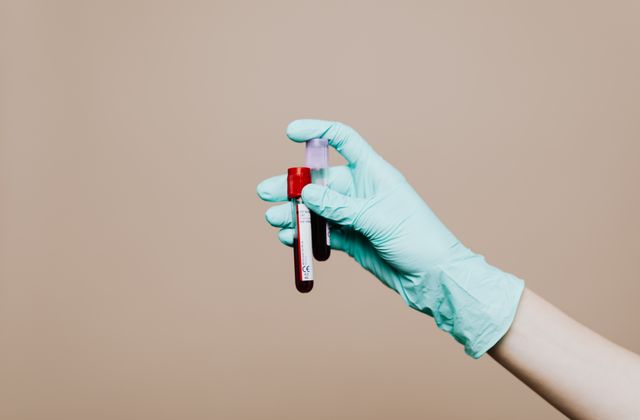
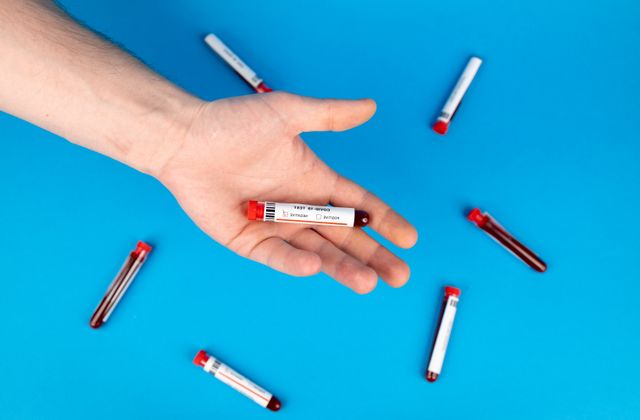
If you have heard about allergy testing before, you probably picture a forearm covered in tiny pricks and red welts. That is the skin prick test, and this panel is not that. The food panel is an IgE blood test. One vial of blood, drawn from a vein in your arm, goes to the lab, and the analyzers check your antibody response to each food separately.
The draw itself is the standard two minutes: a brief needle pinch while the phlebotomist finds the vein, at our lab in Malad or at your doorstep with home collection, then a cotton ball taped to your arm for about five minutes. No fasting, no skipped breakfast. You can eat normally before this test.
Inside the lab, the process follows a method called immunofluorescence, the same family of technology behind the ImmunoCAP systems used in allergy laboratories worldwide. Here is the plain-words version. The lab takes your serum, the clear part of your blood, and exposes it to a fixed sample of each food protein. If your blood contains IgE antibodies built for that food, they latch on. The lab washes away everything loose, then adds a second antibody that carries a fluorescent tag and sticks to the captured IgE. When the machine measures the fluorescence, it is really measuring how many of your IgE antibodies latched on. More glow, more antibody, higher number. That is all a class 4 or class 5 is: a brighter signal on a machine, translated into a number on your report.
Nothing in that process involves your stomach, your lips, or your skin. Which is exactly why the number cannot tell you what will happen when you actually eat the food.
A word on the journey your sample takes, since patients ask. With home collection, the phlebotomist draws the vial at your doorstep, labels it in front of you, and carries it in a temperature-controlled box to the lab. There the blood is spun in a centrifuge to separate the serum, the pale yellow liquid that carries the antibodies, from the red cells. That serum is what the analyzers work on, and leftover serum can be frozen for weeks, which is why a retest or an added allergen does not always need a fresh needle. From doorstep to report, the sample never sits in the heat, and the whole chain is why home-collection results match lab-drawn ones.
Why your doctor thinks in veg and non-veg
The split is not just a quirk of the test catalogue. It mirrors how doctors in India actually investigate food reactions, and how Indian households actually cook.
A vegetarian family that never buys chicken or prawns gains nothing from paying for non-veg results. For them, the vegetarian food panel alone covers the foods that could plausibly be the culprit. The full veg-and-non-veg panel earns its keep when the household eats everything, when the patient eats out often, or when the doctor wants the complete picture before narrowing down.
The split also helps the doctor think in terms of protein families. Milk, egg, wheat, soy and peanut account for the large majority of childhood food allergies worldwide. Fish, shrimp, and prawn shellfish reactions dominate the adult food-allergy scene in coastal regions, and Mumbai is a coastal city where prawns show up in everything from home cooking to restaurant gravies. When the doctor looks at your report, the veg side answers one set of questions about your diet and the non-veg side answers another. That is why the first test link in an article like this one sets the booking-box category: the test the article is about should be the test the page helps you book.
The 0-to-6 classes, decoded line by line
Your report will not say positive or negative in plain words for each food. It will show the food, a number in kU/L (kilounits per litre, the unit for IgE concentration), and a class from 0 to 6. Here is what those classes generally mean, based on the reference system used by major allergy laboratories such as Mayo Clinic Laboratories.
Class 0, below about 0.10 kU/L, means negative. No meaningful antibody activity detected for that food. There is sometimes a borderline zone between 0.10 and 0.34 that some labs report as equivocal, a grey strip where the signal is too faint to call.
To make this concrete, picture a fragment of a real report. Milk: 0.08, class 0. Egg white: 1.4, class 2. Peanut: 22.6, class 4. Wheat: 0.5, class 1. Reading it line by line: milk is clear, egg white shows genuine sensitization worth discussing, peanut shows a strong antibody signal that makes a true allergy likely but still needs the history, and wheat sits in the equivocal zone where the doctor will mostly go by whether you actually react to wheat. The same report can carry four different verdicts, and the class is what lets the doctor sort them in seconds.
Class 1, roughly 0.35 to 0.69 kU/L, is also equivocal. Something registered, but weakly. On its own it means almost nothing clinically. Many labs will flag class 2, from about 0.70 kU/L upward, as the first genuinely positive result worth paying attention to.
Class 2, about 0.70 to 3.49 kU/L, is positive. The antibody is genuinely present. Class 3, about 3.50 to 17.4 kU/L, is positive as well, with a stronger signal. Classes 4 through 6, from about 17.5 kU/L up past 50 and all the way to 100 and beyond, are described as strongly positive. Each step up means a higher antibody concentration, and higher concentrations do make a true allergy more likely. But likelihood is not severity, and likelihood is not certainty either. That sentence deserves repeating in a report-reading guide, because it is where most misreading happens.
Two practical notes that belong on every such report. First, reference ranges vary by laboratory. The cutoffs above come from one widely used reference system; your lab's numbers may sit slightly differently, and that is normal. Compare a new report only against results from the same lab, using the same method. Second, a very high total IgE, the overall background antibody level, above roughly 2500 kU/L can produce false-positive signals on individual foods through nonspecific binding. Your doctor knows to look for this pattern. You do not need to, which is the point of the next section.
Sensitized is not allergic, and your history is the other half of the diagnosis
Here is the single biggest source of confusion in allergy testing, and the allergy societies are unusually blunt about it. Detecting IgE against a food means you are sensitized to that food. It does not mean you are allergic to it.
The American Academy of Allergy, Asthma and Immunology has stated this plainly: serum antibody levels indicate the presence of specific antibody but do not make a diagnosis, and the presence of antibody does not indicate disease. Mayo Clinic Laboratories carries the same caution on every specific-IgE test definition: some people with clinically insignificant sensitivity have measurable IgE, and results must be interpreted in the clinical context.
What does that look like in real life? A report shows class 3 for wheat. The patient eats roti, bread, and biscuits every day with no symptoms at all. That result is sensitization without allergy, and the correct medical response is to keep eating wheat, not to ban it. The AAAAI goes further: well-tolerated foods should not be removed from the diet even in the presence of positive tests. Removing a food you tolerate, on the basis of a number alone, can shrink your diet for no benefit and real nutritional cost, especially in children.
This is also why doctors get uneasy when panels are ordered without a history. A broad IgE panel run "just to see" on someone with no clear food-reaction story will almost always return a few positives, because low-level sensitization is common and often meaningless. Each of those positives then needs a history to interpret, and without one they create worry rather than answers. The panel is at its best when the doctor already has suspects from your story, and the test narrows the field. The question patients ask us at the counter most often, "will this tell me which food made my stomach hurt last Tuesday", gets this honest answer: almost. It tells you which foods your immune system reacts to, and your doctor matches that list against what you ate and when.
The baked-milk-and-egg wrinkle your report will not explain
One correction that changed how allergists read egg and milk results is worth knowing, because it comes up constantly in Mumbai kitchens where milk goes into everything.
Heating changes some food proteins. Milk and egg behave differently baked versus raw, because baking denatures, or unravels, certain protein shapes that the immune system was reacting to. Research on baked milk and egg has found that around three-quarters of children with milk allergy can tolerate milk baked into foods like cake or biscuits, and roughly two-thirds to 70% of children with egg allergy tolerate egg baked into a wheat matrix such as a muffin. The proteins most responsible behave differently: ovalbumin, the main egg-white protein, is heat-labile, so people sensitized mainly to it often tolerate well-baked egg; ovomucoid is heat-resistant, so people sensitized to it tend to react to egg in all forms and are less likely to outgrow the allergy. The same split exists in milk proteins.
Why does this matter for your panel? The lab tests the food extract as prepared, not your grandmother's cake recipe. If you react to raw egg but eat cake fine, or you break out from fresh milk but tolerate it in cooked food, tell your doctor exactly that. The panel result is one data point; how you react to the food as actually cooked and eaten is the other. Do not try a baked-milk or baked-egg challenge at home on your own, though. Whether a baked-food challenge is safe for you is a decision for the allergist, made with your full history in front of them.
This detail matters more in Indian kitchens than most guides admit. Milk here is rarely just milk. It is boiled for chai, simmered into kheer, reduced for sweets, set into curd, and churned into buttermilk, and each of those preparations treats the proteins differently. A child who breaks out from a glass of cold milk may handle milk boiled into tea without a flicker. That is not the test being wrong. That is the protein being different after heat. When you describe your reactions, name the preparation, not just the food: raw milk versus boiled, fried egg versus cake, fresh paneer versus the paneer in a long-simmered gravy. Your doctor cannot use what you do not tell them.
Our deep dive on the egg white allergy test walks through why the egg gets split into white and yolk on reports, if you want the full protein-level story.
The pollen trap: when the real culprit is in the air
Sometimes a food panel result has an explanation that has nothing to do with the food at all. It has to do with pollen.
Pollen-food allergy syndrome, also called oral allergy syndrome, happens because some proteins in fresh fruits, vegetables, and tree nuts look structurally similar to proteins in pollens. Your immune system, sensitized to the pollen, mistakes the food protein for the pollen and reacts. The classic symptom is itching, tingling, or mild swelling of the lips, mouth, tongue, or throat within minutes of eating a raw fruit or vegetable, often fading quickly. It affects a large share of people with pollen allergy, and cooking usually prevents it because heat destroys the fragile cross-reactive proteins.
This matters for panel interpretation in two ways. First, someone with a dust or pollen allergy can show positive IgE results for foods they tolerate perfectly well, because the test is picking up the cross-reactive antibody rather than a true food allergy. The NHS allergy services note exactly this pattern: allergy tests positive for foods but driven by grass, ragweed, or tree pollens. Second, if your symptom is "my lips tingle when I eat raw apple but cooked apple is fine", that history points more toward pollen cross-reactivity than toward a primary food allergy, and the doctor reads the panel through that lens.
In Mumbai, the airborne side of this story leans heavily on dust mites and monsoon moulds rather than the tree pollens of temperate countries, but the mechanism is identical. Year-round humidity keeps dust-mite exposure high, and the post-monsoon months stir up mould spores. If your food results look noisy and your nose is also involved, the doctor is not being evasive by ordering the inhalant panel too. They are checking whether the food positives are echoes of something you breathe. If your symptoms mix stomach trouble with sneezing and itchy eyes, your doctor may order the Allergy Panel - Inhalant alongside the food panel, since the airborne side and the food side keep explaining each other. Our guide to the dust allergy panel covers the airborne half of that story.
Questions patients actually ask at the counter
Do I need to fast before the food allergy panel? No. Eat normally. Unlike some metabolic tests, this one measures antibodies that do not swing with your last meal, so no fasting and no skipped breakfast.
Do I have to stop antihistamines? For a skin prick test, yes, antihistamines are usually paused because they blunt the skin reaction. For an IgE blood test like this panel, most doctors do not ask you to stop them, because the antibodies are measured directly from your blood. The NHS allergy services specifically note the blood test is useful precisely when antihistamines were taken and skin testing is not suitable. Your doctor will tell you if anything specific needs pausing.
Can children take this test? Yes, and pediatricians order it often, for eczema, recurrent stomach pain, or reactions after specific meals. One blood draw is far kinder to a nervous child than a row of skin pricks, and it needs only a small sample.
My report shows class 3 for wheat but I eat roti every day with no problem. Should I stop eating wheat? No. A positive result for a food you tolerate is sensitization without allergy, and the allergy societies are explicit that well-tolerated foods should not be removed on the basis of a positive test alone. Take the report to your doctor, keep eating normally until then.
Does the test cover cooked and raw forms separately? No. The panel tests the lab's food extract, while cooking changes some proteins, as with baked milk and egg. Tell your doctor how you react to the food as you actually eat it: raw, cooked, or both.
I already know peanuts are my problem. Do I need the full panel? Not necessarily. If one food is already confirmed, your doctor may order just an individual allergen test. The full panel earns its keep when the trigger is unknown and the suspect list is long.
My lips tingle when I eat raw apple. Is that a food allergy? It may be pollen-food allergy syndrome, the pollen cross-reactivity described above, especially if cooked apple causes no trouble and you have dust or pollen allergy symptoms. Mention it to your doctor rather than diagnosing it yourself.
What is the difference between this panel and an IgG food intolerance test? They measure different antibodies and mean different things. This panel measures IgE, the antibody behind true allergic reactions. IgG food panels measure a different antibody that mostly reflects exposure to foods you eat, and every major allergy body advises against using IgG results to diagnose food allergy or intolerance. More on that below.
How long until I get the report? About 24 hours. The lab runs round the clock, and home-collection samples from Malad, Kandivali, Borivali and Goregaon reach it the same day.
Can I book this for the whole family? Yes. Food panels make sensible family screening when allergies run in the family. Each person needs their own sample and their own report, since IgE patterns are individual.
What this test cannot do, and the tests it is not
A guide like this one should be honest about the edges. The food panel cannot predict how severe a reaction will be. It cannot tell cooked apart from raw. It cannot diagnose non-IgE food problems on its own, such as food-protein-induced gut syndromes that work through different immune pathways, and it is not designed for vague chronic symptoms with no clear food trigger.
The test it is most often confused with is the IgG "food intolerance" or "food sensitivity" panel, sold widely by private labs. The confusion is understandable, because the names sound similar and both involve blood. But they are different tests measuring different antibodies. IgG against foods mostly marks exposure, meaning you eat that food regularly, and the European Academy of Allergy and Clinical Immunology concluded as far back as 2008 that IgG testing is irrelevant for diagnosing food allergy or intolerance and should not be performed for food-related complaints. The AAAAI formally supported that position, the US NIAID expert panel recommended against it, and Cleveland Clinic's allergy guidance lists IgG testing first among the five tests not recommended under current guidelines. A long list of foods to avoid, generated without a history and without any confirmatory challenge, is not a diagnosis. It is a shopping list for anxiety.
The test that actually confirms a food allergy is the oral food challenge: eating gradually increasing amounts of the suspected food under direct medical supervision, with emergency treatment on hand. The NIAID guidelines, Cleveland Clinic, and the NHS all describe it as the gold standard, the one test that confirms an allergy rather than inferring one. It is used when the history and the blood results do not line up, or before a major dietary decision. It is done by an allergist, in a clinic, never as a home experiment.
Who the panel suits, and who should skip straight to a single allergen
The full panel is the right tool when the trigger is a mystery and the suspect list is long: recurring hives with no pattern, stomach trouble that follows no single meal, a child with eczema where the doctor wants the full dietary picture. It is also useful as a periodic recheck, since IgE patterns can change over the years and a childhood allergy can fade.
The single-allergen test is the right tool when one food is already the prime suspect. If every reaction in the family story points at egg, ordering the individual egg white allergy test (and yolk, if the doctor wants both) is sharper and cheaper than screening the whole kitchen. The same logic applies when a past reaction was severe: a focused test plus an allergist's plan beats a broad sweep.
There is one more scenario worth naming. If you have ever had anaphylaxis, a severe reaction with breathing difficulty, throat tightness, dizziness, or a drop in blood pressure after eating something, the panel is not step one. Emergency care and an allergist are step one. A blood test never replaces that, and a severe reaction history changes how every result on the report gets read. Our explainer on the tryptase blood test covers the marker doctors use when anaphylaxis itself needs investigating.
A field guide for the week around your blood draw
- Do: eat normally before the test. There is no fasting requirement, and arriving hungry helps nobody.
- Don't: stop your regular medicines on your own. Most doctors do not require pausing antihistamines for an IgE blood test, but the call is your doctor's, not the internet's.
- Do: write down your symptom story before the appointment. Which foods, how much, how soon after eating the symptoms started, how long they lasted, and whether it happens every time. This history is half the diagnosis.
- Don't: start eliminating foods because of a report you have not yet discussed with your doctor. Positive results without symptoms are sensitization, not allergy.
- Do: note cooked versus raw. If you tolerate a food cooked but not raw, or the reverse, that detail changes the interpretation, especially for milk, egg, fruits, and vegetables.
- Don't: order a broad IgG "intolerance" panel alongside and try to merge the two reports. They measure different things, and the IgG one is not a validated allergy test.
- Do: tell the phlebotomist about fainting history or difficult veins. The draw is one vial and two minutes, but a heads-up makes it smoother.
- Don't: panic at a class 4 or 5 before your follow-up. Strongly positive means a strong antibody signal. Your doctor still needs your history to say what it means for your plate.
Booking it in Mumbai: the panel, its siblings, and the packages
The full Allergy Panel - Food (Veg & Non-Veg) is the pick when the trigger is a mystery. Vegetarian households often choose the vegetarian food panel alone, since the non-veg foods on the big panel do not apply to them. When the doctor suspects the problem is not food at all, the comprehensive adult allergy panel casts a wider net across food, inhalant, and other triggers in one go. And if your symptoms straddle the kitchen and the air, the inhalant panel article explains the airborne side.
If you are comparing options, the Food Allergy Panel - Standard package bundles a wide food screen into one booking, while the Allergy Combo Package pairs food and airborne screening for people whose symptoms live in both worlds. Browse the full tests list or the packages page if you are weighing combinations.
To book, 84250 40353 is the number, or book online. The lab runs round the clock, so a Sunday-afternoon slot is as easy as an early-morning one before office. The report lands in roughly 24 hours either way. Prefer not to visit? Home collection is free across Malad, Kandivali, Borivali and Goregaon: the phlebotomist takes one vial in about two minutes, and you get your class-by-class report the next day. One panel, one draw, and a suspect list your doctor can actually work with.
References
Mayo Clinic Laboratories, Food-Fruit Panel test definition (FOOD2): IgE class reference values and interpretation cautions. AAAAI support of the EAACI Position Paper on IgG4 testing in food allergy (Journal of Allergy and Clinical Immunology, 2010). Cleveland Clinic ConsultQD, what gastroenterologists need to know about managing food allergies in clinical practice. NIAID-sponsored food allergy guidelines summary (American Academy of Family Physicians).
Book these tests at home
Live prices · free home sample collection in Malad, Kandivali, Borivali & Goregaon
Allergy Panel - Food (Veg & Non-Veg)
- Report in 48 hrs
- Free home collection
Allergy panel - food Vegetarians Panel (BY IMMUNO - EIA)
- Report in 48 hrs
- Free home collection
Allergen, Individual - Food Egg White Anda
- Report in 24 hrs
- Free home collection
Allergy Panel - Inhalant
- Report in 48 hrs
- Free home collection
Allergy panel - others Adult (Comprehensive) Panel parameters (BY IMMUNO - EIA)
- Report in 48 hrs
- Free home collection
More tests related to this topic
Other Allergy tests you can book with free home sample collection.
ABPA Profile - Allergic Bronchopulmonary Aspergillosis
- Report in 48 hrs
- Free home collection
Allergen, Individual - Food Egg Yolk Anda
- Report in 24 hrs
- Free home collection
Allergen, Individual - Micro organism Aspergillus Fumigatus fungus
- Report in 24 hrs
- Free home collection
Allergy - Dust Panel (BY IMMUNO - EIA)
- Report in 48 hrs
- Free home collection
Allergy - Milk & Milk Product Panel
- Report in 48 hrs
- Free home collection
Allergy - Non - vegetarian Panel (BY IMMUNO - EIA)
- Report in 48 hrs
- Free home collection
Allergy Screening Panel - Total IgE Antibodies with Phadiatop (Above 5 Years)
- Report in 48 hrs
- Free home collection
Allergy Screening Panel - Total IgE Antibodies with Phadiatop (Below 5 Years)
- Report in 48 hrs
- Free home collection
Allergy screening Tryptase
- Report in 48 hrs
- Free home collection
DRUG ALLERGY SCREENING TESTS (BY IMMUNO - EIA)
- Report in 48 hrs
- Free home collection
Eczema Maxi Panel
- Report in 48 hrs
- Free home collection
ECZEMA Mini Panel
- Report in 48 hrs
- Free home collection
Get more from the same visit
Health packages that already include these tests, and tests people usually add.
Frequently asked questions
Do I need to fast before the food allergy panel?
No. This test measures IgE antibodies, which do not swing with your last meal, so eat normally and arrive at your usual time.
Do I have to stop antihistamines before the test?
For an IgE blood test most doctors do not ask you to pause them, since antibodies are measured directly from the blood. Your doctor makes the final call.
Can children take this test?
Yes. Pediatricians order it often for eczema, recurrent stomach pain, or reactions after meals, and one blood draw is far kinder than skin pricks.
My report shows class 3 for wheat but I eat roti daily with no problem. Should I stop?
No. That is sensitization without allergy, and allergy societies are explicit that well-tolerated foods should not be removed on a positive test alone.
Does the test cover cooked and raw forms separately?
No. The lab tests its own food extract while cooking changes some proteins. Tell your doctor how you react to each food as you actually eat it.
I already know peanuts are my problem. Do I need the full panel?
Not necessarily. A single-allergen test is sharper and cheaper when one food is confirmed. The full panel earns its keep when the trigger is unknown.
My lips tingle when I eat raw apple. Is that a food allergy?
It may be pollen-food allergy syndrome, where pollen antibodies cross-react with raw fruit. Mention it to your doctor rather than self-diagnosing.
What is the difference between this panel and an IgG food intolerance test?
This panel measures IgE, the antibody behind true allergic reactions. IgG food panels measure exposure-related antibodies that every major allergy body says should not be used to diagnose allergy or intolerance.
How long until I get my report?
About 24 hours. The lab runs round the clock and home-collection samples from Malad, Kandivali, Borivali and Goregaon reach it the same day.
Can I book this for the whole family?
Yes. Each person needs their own sample and report, since IgE patterns are individual.
HWP Diagnostic Editorial Team
Health guides written by the team at HWP Diagnostic, Mumbai, to help you understand your tests before you book. This article is for general education and is not a substitute for medical advice - reference ranges vary between labs, so always discuss your results with your doctor. Read our editorial policy. Photos: Pexels.